
Introduction
Finding cheap Linux VPS hosting services does take a keen sense of judgment. Apart from cost considerations, performance and security should be key aspects of such an endeavor. OnliveServer has shown to provide affordable VPS hosting while maintaining reliability in all three areas mentioned above. Most of the companies providing cheap services fail to consider the needs of their clients. It is therefore important to assess your needs before selecting a provider. You will benefit greatly by picking the best server that will suit your application. Making a decision based on the performance of the server is therefore important. The company provides a wide range of resources that can help you in selecting a good VPS host.
Understanding the Basics of VPS Hosting
Navigating the world of VPS hosting can be daunting at first. But don’t worry. Here’s a breakdown that simplifies it.
What is a VPS?
A Virtual Private Server (VPS) is a virtualized machine hosted on a physical server. Unlike shared hosting, a VPS grants users dedicated resources like CPU, RAM, and storage.
Why Choose Linux for Your VPS?
Linux is an open-source operating system renowned for its stability and flexibility. It’s a favorite among developers for several reasons:
So, a Linux VPS Server Hosting stands out for its blend of autonomy and affordability, perfect for developers and businesses eager for control without breaking the bank.
Comparing Linux and Windows VPS for Developers
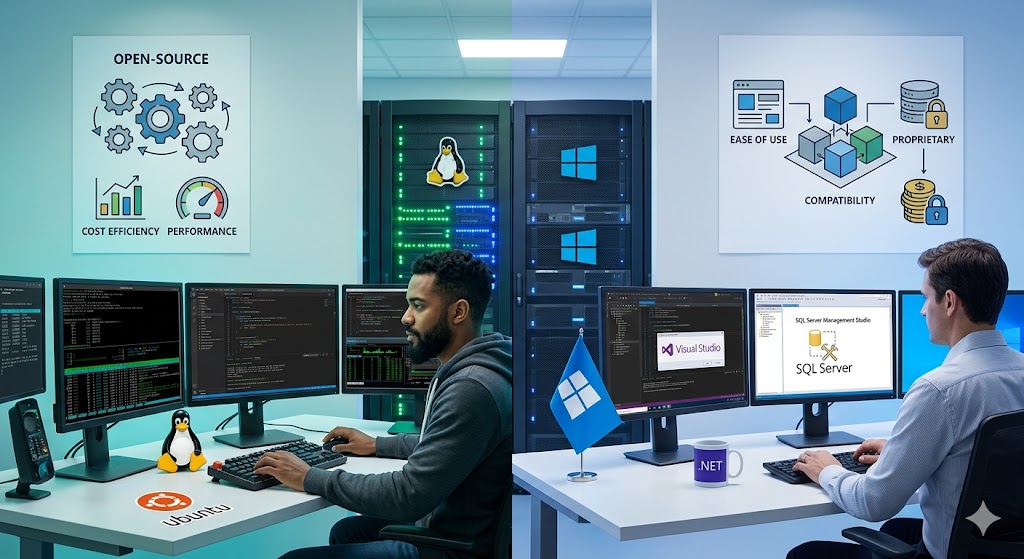
Choosing between Linux and Windows VPS depends heavily on your specific needs. Each has its strengths, but here’s where Linux often pulls ahead.
Linux VPS Advantages
Windows VPS Considerations
While Windows might seem friendlier to those already embedded in its ecosystem, Linux offers a level of performance and cost efficiency that is hard to beat. For developers prioritizing flexibility and scalability, Linux VPS shines as the preferred choice.
Best Linux Distros for VPS Hosting in 2026
Selecting the right Linux distribution for your VPS can significantly affect performance and usability. Let’s see what’s trending for 2026.
Ubuntu Server
Debian
AlmaLinux
By aligning the choice of Linux distro with your project needs and expertise level, you can maximize your VPS’s potential. Remember, the right distro can be a major shift in optimizing both performance and cost.
Why Choose Linux VPS Hosting Over Windows?
Linux vs. Windows is not a choice of preferences, but of necessity. Wait! Why? Well, for professional developers, Linux brings amazing open-source advantages and financial gains that Windows simply cannot provide. So why wouldn’t everyone use the option that is cheaper? Because many people choose Windows despite all the implications it may have for their budget and work process. What nobody will tell you is that licensing costs on Windows grow exponentially, particularly when you take into account scaling. Of course, there’s nothing to gain if your whole crew knows only Windows. Just keep an eye out for additional costs that will increase your expenses by 20 percent or more.
Cost-Effectiveness
Linux hosting almost always costs less. Windows demands licensing fees for every instance, which accumulates rapidly, especially for growing businesses that need to scale their infrastructure often.
Performance and Flexibility
Look. Linux is legendary for its rock-solid stability. Its open-source nature means developers can tailor it precisely to their specific project requirements, creating an adaptable environment unmatched by proprietary systems.
Choosing Linux VPS from a provider like means getting a system that truly molds to your exact project needs. It delivers both raw power and essential control in a landscape often constrained by expensive licenses and unnecessary system overhead. A smart choice can save you thousands. Trust a platform designed for a truly solid foundation.
Migrating a Linux Server to AWS Cloud
It may sound scary, but it is possible to move smoothly into the cloud environment. There is one thing that should be considered first: most migration failures are caused by bad planning. No way, it is not as frightening as it seems. But this advice will be useless if you have zero knowledge about networking technologies. I thought that the tools would solve all my problems. They wouldn’t. You should know everything about your current infrastructure, otherwise, you will face serious difficulties. A good migration reduces your costs by up to 30%, yet you should consider some hidden risks.
Pre-Migration Checklist
Ensure that you back up everything on the server. Everything, period. Next, analyze all the configurations currently in place on your server, and the kind of workload it usually handles. This will help you avoid problems later.
Using AWS Tools
AWS provides essential tools, like AWS Migration Hub and the AWS CLI, to make your transition smoother. These tools are built for the job.
After the move, testing becomes absolutely critical. Verify every piece of data. Check every application. Make sure everything performs as expected within the AWS environment. Team can guide you through each stage, significantly reducing potential downtime and ensuring a truly smooth transfer.
Frequently Asked Questions

Conclusion
It is indeed a brilliant idea to go with a Linux VPS that is cost-effective, but again it depends on which company you are going to choose. I have actually seen companies saving a lot of money after switching to such servers. Combines affordable rates along with great technical support, thus providing its customers with excellent services. The point is to make sure that your choice in hosting companies meets your specific technical demands and budgetary constraints. And here is another thing to keep in mind: do not choose your provider based on the cheapest rates.